


Background: A Pragmatic Choice Amid European Supplier Turmoil
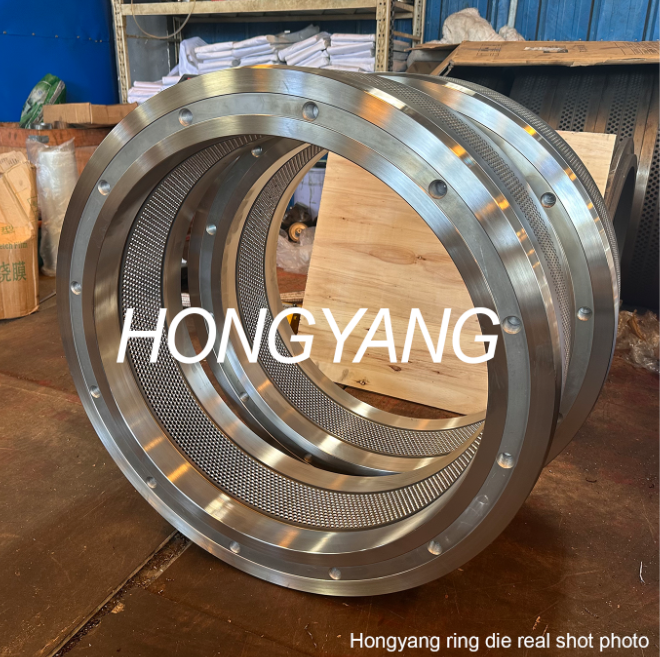
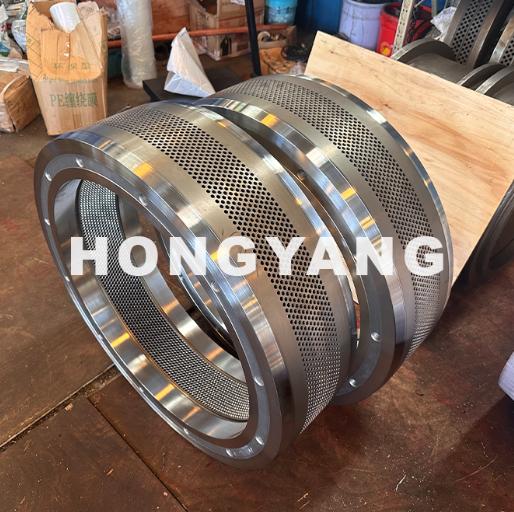
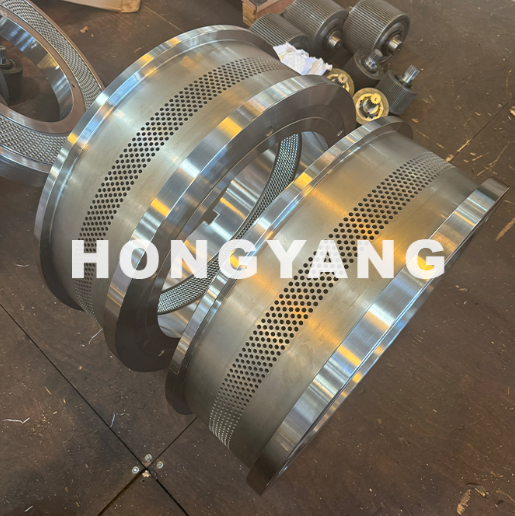
Back in the fourth quarter of 2023, in a feed processing cluster in central Poland, Mr. K ran a medium-sized feed mill that had long relied on a well‑known local ring die manufacturer. When that European supplier suddenly closed down, his production line faced the risk of losing a critical component. Mr. K was forced to search globally for an alternative. When first approached by Hongyang Feed Machinery, he admitted he had never bought a Chinese‑made ring die and had serious doubts about material uniformity, heat treatment processes, and actual service life. After our sales engineers provided multiple rounds of technical comparisons, third‑party material test reports, and references from other European users, Mr. K decided to place a small trial order – two ring dies for real‑world validation.
Usage Feedback: Active Recognition Triggered by Two Months of Measured Data
After the ring dies arrived at the Polish plant, Mr. K’s team completed installation and commissioning within 24 hours. The dies worked directly with the existing pellet mill line without any modification. About 70 days into operation, the customer proactively connected with our technical team via video conference. On screen, Mr. K placed the worn working surface of a dismantled ring die under a measuring instrument – the inner wall wear was far below the European industry replacement threshold for the same period, the outlet surface remained smooth, and there were no visible fatigue cracks. His brief assessment: “Solid material, wear control exceeds expectations, and the lifespan gives us confidence.” He explicitly stated that future orders would give priority to the Hongyang brand, and he was willing to share his real experience with peers in the Polish Feed Industry Association.
Extended Thinking: An Industrial Signal from an Eastern European Workshop
Mr. K’s switch of suppliers might look like an incidental supply chain substitution, but it actually reflects a deep shift in the global feed machinery landscape. For a long time, small‑ and medium‑sized European feed mills have been path‑dependent on local and nearby precision manufacturing systems. Yet supply chain resilience is precisely tested at local breaking points. Hongyang ring dies earned a repeat purchase intention from a Polish customer not by price alone, but by addressing professional users’ core concerns on three subtle levels:
The Democratization of Materials Science
The life of a ring die hinges on the purity of the alloy steel and the precise control of the heat treatment curve. When a customer disassembles a die and measures the bore deformation, they are essentially checking whether Chinese manufacturing can match the metallurgical standards of established European brands. The positive feedback from measured data erased the initial bias caused by geographic labels.
Adaptive Application Engineering
A ring die is not a one‑size‑fits-all part. Different formulations, raw material particle sizes, and steam conditioning conditions demand significantly different compression ratios and relief angles. Instead of simply copying old European drawings, the Hongyang team re‑engineered the hole pattern and distribution based on information provided by Mr. K. This upfront technical intervention reduced the trial‑and‑error cost at the customer’s site.
A Restructured Service Logic
During the vacuum left by the local supplier’s absence, the customer’s biggest fear was not just the product itself, but the breakdown of the response chain. By offering a time‑zone‑covered technical support mechanism and a fast spare‑parts channel, Hongyang compressed the natural disadvantage of “long‑distance procurement” into an acceptable range, giving the Polish plant manager a sense of certainty comparable to local service.
Product Philosophy: Craftsmanship – A Universal Language That Crosses Borders
The value of a feed ring die is realized over thousands or even tens of thousands of working hours; every die changeover means lost output across the entire line. Inside the Hongyang ring die team, there is an unwritten rule: never promise a parameter you can’t verify, and never apply different process standards based on the order’s origin. Whether for a European feed mill’s high‑fat formula or an anti‑corrosion requirement in a humid Southeast Asian warehouse, every recipe is checked against a uniform technical memo system – raw material type, material characteristics, hole design, hole distribution – before the die enters production. This discipline of “slow up front, fast in delivery” is probably the engineering meaning behind Mr. K’s word “solid.”
Conclusion: Let the Next Choice Begin with an Honest Word from a Peer
When a ring die rotates quietly, the pellet mill is just a piece of steel equipment. When the ring die is stable and durable, it becomes a positive variable on the feed mill’s profit statement. Hongyang ring dies have no intention of piling up adjectives like “ultimate” or “top‑tier” in our ads. Instead, we prefer to let the cumulative tonnage continuously processed on the East European plain, the reduced spare‑parts inventory in a South American customer’s warehouse, and the shortened downtime in a Southeast Asian user’s logbook tell the same story: A good product travels far on its own, and it makes those who use it willing to speak up.
If you are evaluating which supplier to turn to for your next batch of ring dies, listen to what the users who have already unpacked, installed, and kept recording wear data have to say. Perhaps their casual “It’s pretty good” is exactly the peace of mind your production line needs.
Hongyang Ring Die – holding the right wear resistance for every ton of reliable output.
Post time: May-11-2026


