


In the industrial production of compound feed, the pellet mill is the core equipment determining the quality of pellet formation. The final shape, density, and stability of pelleted feed depend directly on the operating condition of the pellet mill. However, during actual production, a dense, hard layer of material often forms between the ring die and the roller, preventing the roller from effectively squeezing the material into the die holes, leading to either the ring die seizing up or the roller slipping – a phenomenon commonly known as “blockage” or “plugging.” Why does this problem occur, and what measures should be taken to address it?
Improper Adjustment of the Gap Between Ring Die and Roller
The die-roller gap is the most direct adjustable parameter affecting pelleting efficiency and stability. When the gap is too large, the thickness of the material layer between the ring die and roller increases, and its uniformity decreases, causing uneven force on the roller and making it prone to slipping. When the compressive force exerted by the roller on the material is lower than the frictional resistance of the die hole inner wall against the material, the material cannot be extruded through the die holes, leading to rapid blockage.
Poor Steam Quality and Conditioning Effect
Ideal Pelleting Conditions:
- Raw material moisture content: 12%–15%
- Use of dry saturated steam
- Conditioning time: no less than 30–45 seconds
Qualified dry saturated steam serves multiple functions: softening the material, reducing frictional heat, extending ring die life, promoting starch gelatinization, and enhancing fiber binding.
When steam quality is substandard, the risk of blockage increases significantly: Insufficient steam pressure or high moisture content can cause the conditioned material’s moisture to exceed 18%, making it too wet and soft, increasing the friction coefficient inside the die holes, and causing roller slip. Fluctuations in steam pressure lead to unstable conditioning effects, causing sharp fluctuations in the main motor current of the pellet mill, which can easily trigger sudden blockage.
Operator Tip – Steam Pressure & Material Check
Monitor steam pressure in real time (0.2–0.4 MPa recommended). A simple check: take a handful of conditioned material – when squeezed, it should form a ball; when released, it should just fall apart. It should feel warm (70–85°C) with no water stains or noticeable stickiness.
Conditioning Equipment and Process Deficiencies
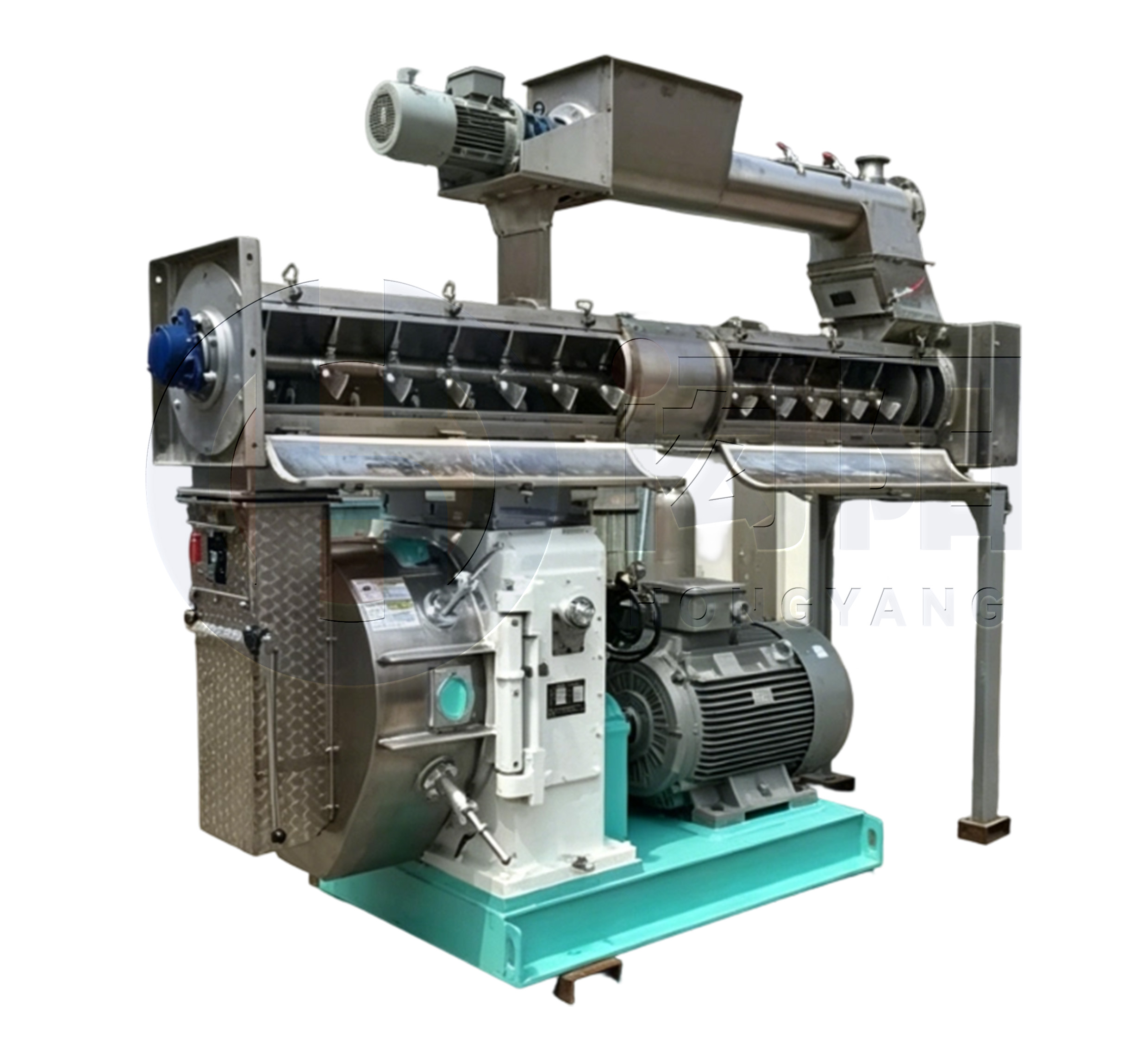
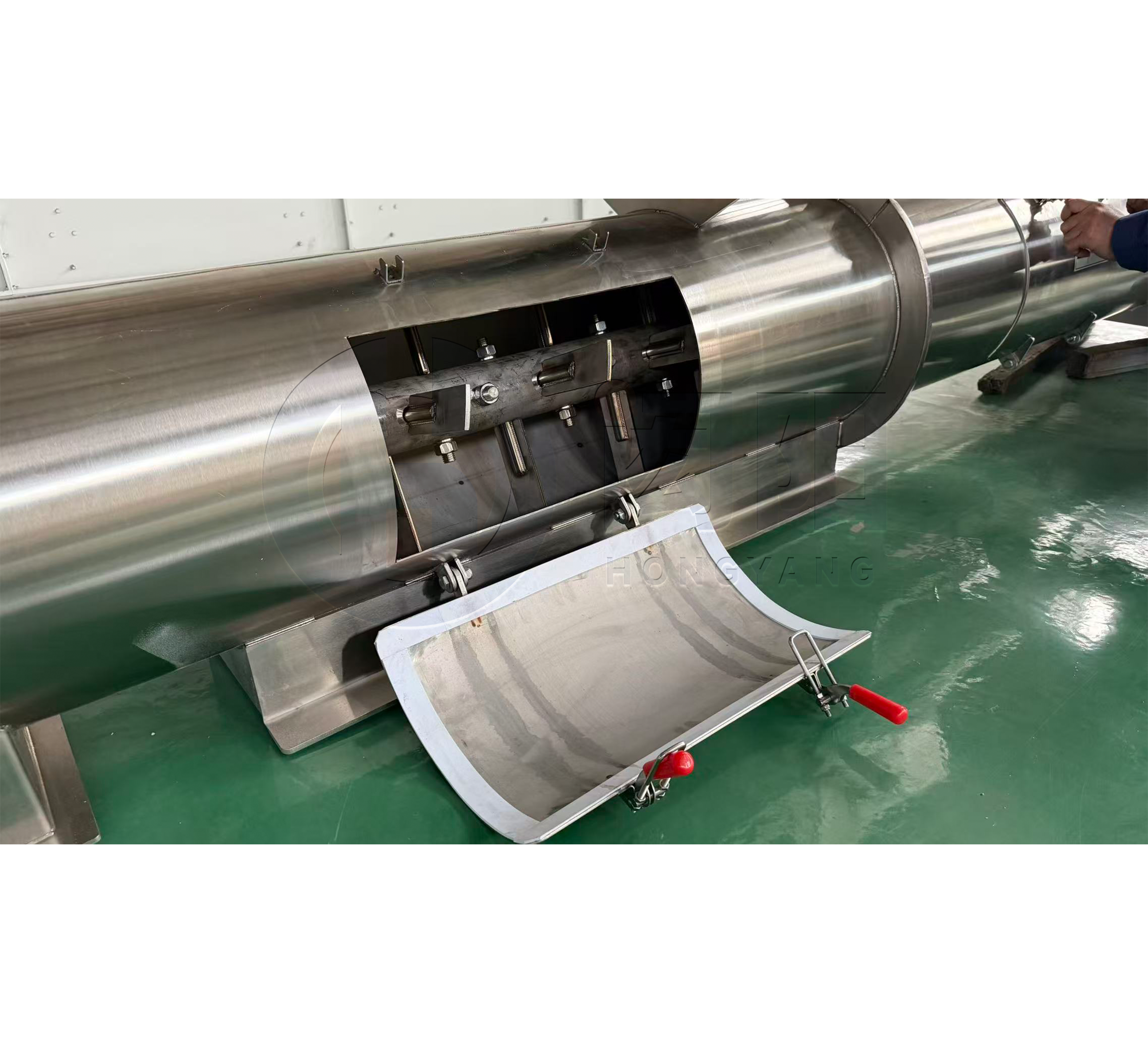
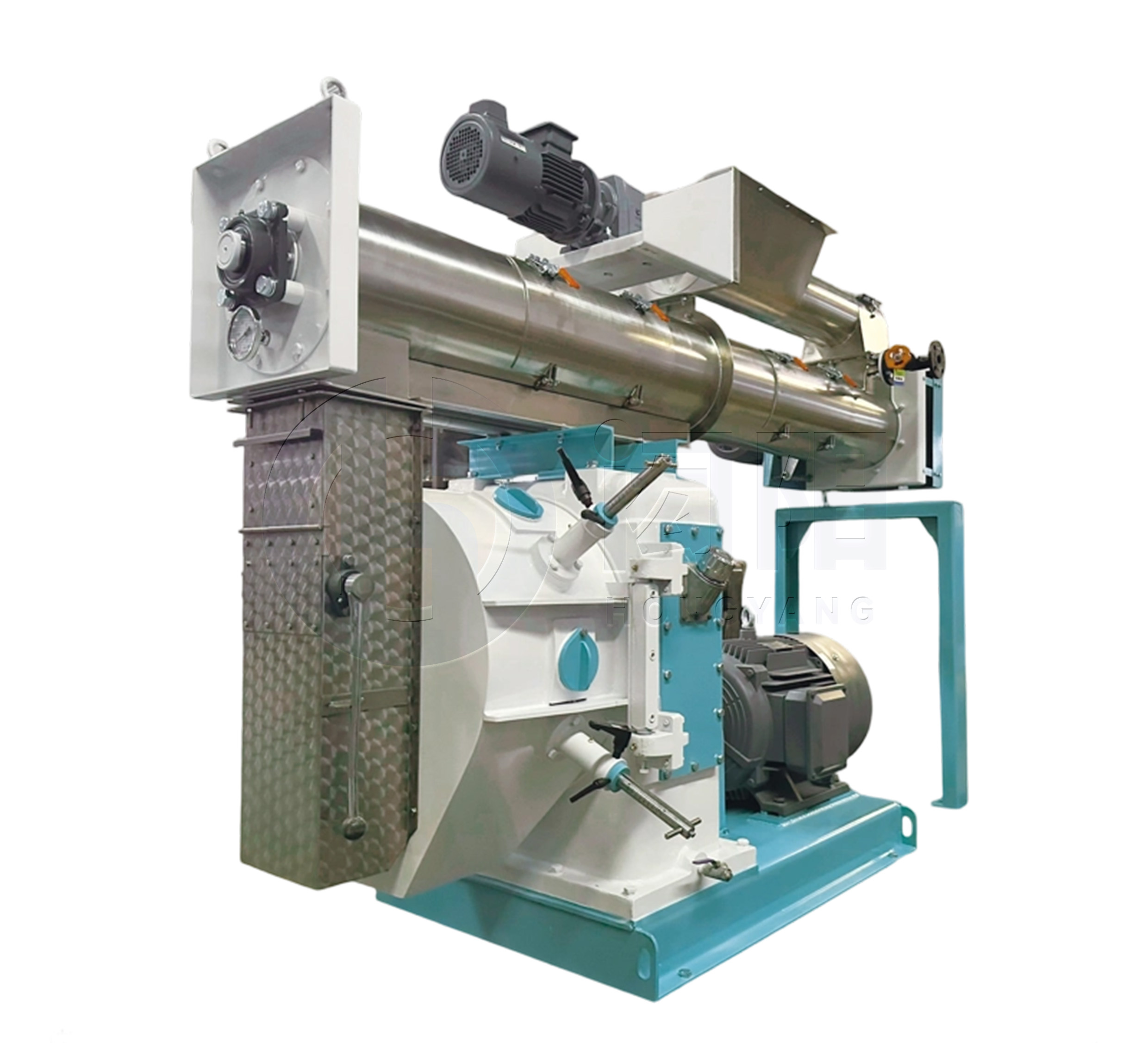
Conditioning is the process where powder material and steam are thoroughly mixed, absorb water, increase temperature, and gelatinize inside the conditioner. The conditioning effect directly determines pellet mill output and pellet quality, and is especially critical for the water stability of specialty aquafeeds. If the conditioner design is outdated, paddles are worn, or conditioning time is insufficient, the material will be unevenly cooked, with some material still in a raw state, making it very easy to block die holes upon entering the pelleting chamber.
Currently, advanced configurations use a combination of “conditioner + retention tank + conditioner,” providing a total conditioning time of 2–4 minutes, which significantly improves conditioning and reduces blockages.
Wear and Mismatch of Ring Die and Roller
Reduced smoothness of the ring die holes, wear of the relief bore, fatigue hardening of the inner wall, or step-like wear will all significantly increase discharge resistance. When the roller corrugations wear down to a flat surface, the gripping ability is essentially lost, and the roller will only idle on the material surface. Furthermore, using a new ring die with old rollers, or a mismatch in hardness between the ring die and rollers, will accelerate the occurrence of slipping and blockages.
Improper Operation Parameter Settings
- Excessively fast feed rate: Feeding too much material within a short time, exceeding the pellet mill’s maximum extrusion capacity, causes material to accumulate in the ring die chamber and quickly leads to blockage.
- Lack of current monitoring: Failing to set or ignoring the upper limit alarm for the main motor current, operating for extended periods at high current limits, triggers overload protection or directly causes mechanical seizure.
Standardized Blockage Handling Procedure
Once blockage occurs: immediately press the emergency stop button, simultaneously stop the feeder and conditioner, and close the steam valve. Cut off the main power and hang a warning sign stating “Under Repair – Do Not Close Switch.”
Forced Loosening and Material Discharge
If the equipment is equipped with a main shaft reverse function, use jog reverse to loosen the material.
Key Operating Points:
- Jog reverse for 5–10 seconds, then forward for a few seconds; repeat several times.
- Interval between each jog: at least 30 seconds to prevent motor overheating.
- Before reversing, confirm there are no foreign objects (e.g., metal pieces) inside the pelleting chamber.
- Note: the reverse function is for emergency discharge only.
For equipment without a reverse function or where reverse is ineffective, open the pellet mill door, use a copper rod or hardwood stick to knock blocked die holes from the outside inward, and use a flat scraper to remove hardened material from the roller surface. Do not strike the ring die directly with an iron hammer, as this may cause irreversible mechanical damage.
Thorough Cleaning and Die Hole Clearing
Remove all residual material from the inner and outer surfaces of the ring die, rollers, scraper, feed cone, and other components. For severely blocked die holes, use an electric drill (low speed, high torque setting) with a dedicated blunt drill bit matching the die hole diameter, drilling slowly from the outside inward. Do not use sharp drill bits or reaming operations, as this may enlarge or damage the inner wall of the die hole.
After cleaning, use a flashlight pressed against the back of each die hole to check the permeability of all holes one by one. If cracks, severe out-of-roundness, or more than 10% of die holes are deformed or out of spec, the ring die should be replaced.
Roller and Bearing Inspection
Manually rotate the rollers to check for bearing binding, abnormal noise, or excessive play. Observe the wear condition of the roller corrugations. If the tooth height is worn down and gripping ability is lost, replace the roller. When replacing rollers, it is recommended to also check the matching condition of the ring die.
No-Load Test Run and Break-In
Close the door, start the main shaft without material, and run idly for 1–2 minutes to confirm no abnormal noise and steady current. Then add a small amount of base material containing about 2% fat or wet material to “feed” and break in the die. Observe the current gradually rising and stabilizing, then gradually increase the feed rate to normal production levels.
During the first 10 minutes after resuming production, intensify monitoring; after confirming no abnormalities, return to normal operation.
Conclusion
Pellet mill blockage is a comprehensive reflection of production management, equipment maintenance, and operating practices. The root causes can be summarized in several areas: die-roller gap, steam quality, conditioning effect, material characteristics, and wear management.
By implementing standardized gap adjustment, steam line optimization, conditioning process upgrades, and full lifecycle management of ring dies and rollers, the frequency of blockages can be reduced by more than 80%.
Should a blockage occur, following a safe, orderly, and efficient emergency repair procedure will minimize downtime losses. The ultimate goal is to achieve long-term, stable operation of the pelleting process and fundamentally reduce the occurrence of blockages.
Post time: May-21-2026


